PD
Pablo Dominguez
Délégation Paris B (CNRS)
Paris, France
33
Total views and downloads
Submit your idea
You will be redirected to our submission process.
Manuscript Submission Deadline 18 May 2027
Edited by: Pablo Domínguez, Kirill Istomin, Cosmin Ivașcu, Andrei Marin and Sezen Ocak
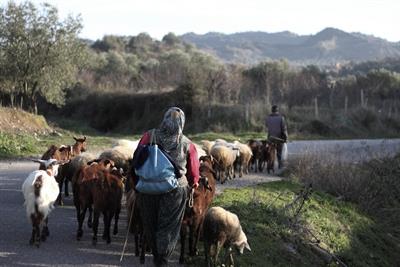
Pastoral peoples within eastern Europe continue to herd livestock using mobile grazing on extensive pastures. These peoples stretch west to east from the Western Balkans on the Adriatic Sea to some Russian Federation republics west of the Ural mountains, and from south to north from the Caucasus mountains to the Kola Peninsula in the Arctic Ocean. Shepherding mostly occurs in the highland regions of these countries where crop agriculture is less attractive and grazing land is more available. However, there are still also many pastoral systems with different degrees of mobility in the great plains and lowlands of eastern Europe.
While having long histories, with particularly dramatic changes during the communist regimes of the mid-twentieth century, the pastoralist systems in these countries more recently also show divergent development pathways, especially after some joined the EU in the early 2000s.
Social, cultural, policy and economic divergences between eastern European pastoralism in EU and non-EU countries
EU accession states (e.g., Romania, Poland, Bulgaria, Slovenia, Croatia)
Primary policy driver: Driven by the EU Common Agricultural Policy (CAP) and High Nature Value (HNV) subsidies. While the European Union (EU) officially endorses transhumant management, actual subsidies often favour consolidated, intensive farms over extensive ones.
Pasture land dynamics: Highly formalised via digital land-mapping registry systems. Generational renewal and predators. Low labour supply. Traditional shepherding increasingly maintained by migrant workers from non-EU countries.
Current system status: Re-institutionalised. Strongly incentivised by environmental protection payments, though burdened by rigid Western bureaucracy. Commercialisation in the Carpathians: in Romania, products like dairy and sheep meat are increasingly distributed in international markets.
Non-EU Balkan and post-communist states (e.g., North Caucasus, Albania, ex-Yugoslav republics, Ukraine)
Primary policy driver: Driven by erratic and highly corrupted state programs, “free” market prices with little state regulation and state subsidies, or international NGO projects.
Pasture land dynamics: Prone to land grabbing, fragmentation, or complete abandonment. Labour source is mostly still family-based, where internal and regional migration are high, producing a strong labour shortage that is usually the main or one of the main limiting factors of extensive pastoralism.
Current system status: Stratified. A minor elite forms large-scale, intensive mobile enterprises, while the majority struggle in subsistence and poverty. Trend toward agropastoral systems, where households increasingly combine mobile livestock rearing with crop farming (e.g., barley or olive growing) to increase income stability.
Research issues
Decades of economic marginalisation in interior mountain regions have driven massive youth emigration. The complex generational knowledge required to manage mobile herds is rapidly disappearing. Poor work conditions and economies under pressure are attracting an immigrant labour force which may lack knowledge of local environment and social norms. Experienced local shepherds sometimes get similar but better paid jobs abroad (e.g. Spain and Italy).
A sharp decline in traditional practices, driven by an aging workforce, changing climate, increasing regulations and a shift toward larger, more intensive farms.
Shifting from small ruminants (sheep and goats) to beef cattle, which often require less labour and offer higher subsidies, is changing pasture ecology, pastoralists’ incomes and pastoral societies.
Expanding populations of predators like wolves (estimated at 23,000 in the EU as of 2023) and other carnivores (lynx, jackals, bears) may cause significant stress to pastoralists and lead to abandonment of remote pastures. Rewilding initiatives and foreign investments into strict conservation areas is an increasing pressure, potentially reducing the resource base for pastoralism (e.g. in Transylvania).
A growing call for an EU Action Plan for Pastoralism to improve infrastructure, training, and climate adaptation, and particularly for East Europe where there is still a lot of room for change.
Maintaining biodiversity of semi-natural grassland managed through traditional grazing.
Continuing pastoralists’ grazing systems as protectors of ecosystem services which help to reduce wildfire risks by consuming combustible vegetation.
Consideration of the importance of the still remaining communal governances of rangelands in eastern Europe (pastoral commons). Each pastoral common is a distinct system with significant social, cultural, environmental and economic values, as well as specific legal foundations and true political potentials. But taken all together, pastoral commons make an outstanding overall contribution to global sustainability, and to the important ecological and cultural transition required today. These systems are particularly present de facto if not de jure, in many eastern European countries such as in the Balkans.
Traditional shepherds face competition from large food distribution networks and supermarkets, alongside a lack of formal recognition for their land-use rights.
Land use pressure for leisure homes in mountain areas is increasing in some countries. This may also have to do with changes in resource rights to what was often managed as commons.
European environmental rules on complex, bureaucratic sanitation and land-ownership requirements often alienate the poorest, semi-subsistence post-socialist farmers, forcing them completely out of the formal livestock economy.
Important
As a Gold open access journal, all submissions are subject to publishing fees. If you require support for Article Processing Charges (APC), please complete our Fee Support Application form shortly before (in which case an abstract may be requested) or immediately after submitting your manuscript. The journal's capacity to provide financial support is very limited. For full details, please see the journal's Publishing Fees page. Any questions? Please contact the Editorial Office.
Please see the following pages for:
Publishing Fees
Author Guidelines
This Special Issue accepts the following article types, unless otherwise specified in the Special Issue description:
Articles that are accepted for publication by our external editors following rigorous peer review incur a publishing fee charged to Authors, institutions, or funders.
Keywords: Pastoralism, Eastern Europe, Transhumance, Common Agricultural Policy, Pastoral commons, Rangelands, Generational renewal
Manuscripts can be submitted to this Special Issue via the main journal or any other participating journal.
Submit your idea
You will be redirected to our submission process.
