GC
Gobinath Chandrakasan
Autonomous University of Queretaro
Santiago de Querétaro, Mexico
1,666
Total views and downloads
Submit your idea
You will be redirected to our submission process.
Manuscript Submission Deadline 2 January 2027
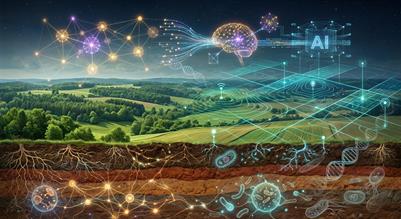
Soil is a fundamental natural resource that supports agricultural productivity, environmental sustainability, biodiversity, and global food security. However, increasing land degradation, nutrient depletion, climate change, salinity, pollution, and unsustainable agricultural practices have significantly threatened soil health worldwide. Consequently, there is a growing need for advanced, data-driven, and biologically integrated strategies to improve soil monitoring, prediction, and management. Recent advances in smart soil science have introduced innovative tools such as Geographic Information Systems (GIS), Artificial Intelligence (AI), remote sensing, machine learning, digital soil mapping, and predictive analytics to better understand soil variability and ecosystem functioning. At the same time, research on soil microbial dynamics has highlighted the essential role of microbial communities in nutrient cycling, carbon sequestration, soil fertility, plant health, and ecosystem resilience. Integrating spatial technologies and AI with microbial ecology provides new opportunities for developing sustainable and climate-resilient soil management systems.
Despite rapid technological progress, several important research gaps remain unresolved. First, there is still limited integration of GIS, AI, and microbial datasets for comprehensive soil health assessment and decision-making. Second, the application of AI and machine learning in soil science is often constrained by limited field validation, insufficient long-term datasets, and challenges related to model interpretability and scalability across different agroecosystems. Third, microbial dynamics in response to climate variability, land-use changes, and precision agriculture practices remain poorly understood at spatial and temporal scales. This Special Issue aims to address these critical gaps by bringing together multidisciplinary research that combines smart technologies, spatial analysis, AI-driven tools, and microbial-based sustainable strategies for advanced soil management.
Scope
This Special Issue, “Smart Soil Science: GIS, AI, and Microbial Dynamics for Sustainable Soil Management,” aims to provide a multidisciplinary platform for advancing innovative research in soil science through the integration of digital technologies, spatial analytics, artificial intelligence, and microbial-based sustainable solutions. The issue focuses on emerging scientific approaches that improve soil health, nutrient management, environmental sustainability, and agricultural resilience under changing climatic conditions.
This Special Issue welcomes high-quality original research articles, reviews, short communications, and case studies that address the development and application of smart technologies and biological systems for sustainable soil management. The scope includes both fundamental and applied research that bridges conventional soil science with next-generation computational and microbial innovations.
Topics of interest include, but are not limited to:
1. Soil microbial ecology, diversity, and functional interactions
2. Soil nutrient dynamics, nutrient cycling, and nutrient-use efficiency
3. GIS, geospatial analysis, and remote sensing applications in soil and environmental sciences
4. Artificial intelligence, machine learning, and predictive modeling in soil science
5. Precision agriculture and smart farming technologies for sustainable crop production
6. Digital soil mapping, spatial statistics, and big-data analytics
7. Climate-resilient soil management and adaptation strategies under climate change
8. Carbon sequestration, greenhouse gas mitigation, and soil health monitoring
9. Data-driven decision-support systems for sustainable agroecosystem management
10. Integration of AI-assisted tools with microbial and environmental datasets
11. IoT-based soil monitoring and sensor technologies for precision soil management
Fee Support
As a Gold open-access journal, all articles are subject to publishing fees. Authors can benefit from financial support from their institution through Frontiers' Institutional Agreements. For full details please see the journals Publishing Fees page. Members of the SECS are also entitled to a 30% discount off their publishing fees.
Please contact the Publishing Office if you have any questions.
This Special Issue accepts the following article types, unless otherwise specified in the Special Issue description:
Articles that are accepted for publication by our external editors following rigorous peer review incur a publishing fee charged to Authors, institutions, or funders.
Keywords: Soil & Microbial layer, GIS & Remote Sensing, AI & Machine Learning
Manuscripts can be submitted to this Special Issue via the main journal or any other participating journal.
Submit your idea
You will be redirected to our submission process.
