CC
Cleo Cunningham
BirdLife international
Cambridge, United Kingdom
4,447
Total views and downloads
Submit your idea
You will be redirected to our submission process.
Manuscript Submission Deadline 10 January 2027
Edited by: Cleo Cunningham, Adam Devenish, Alyona Koshkina, Viktoriya Krylova, Aibek Samakov, Sandagsuren Undargaa, and Steffen Zuther
Rangelands are multi-use lands “dominated by grasses, grass-like plants, forbs, shrubs, and sometimes trees that are grazed or have the potential to be grazed by livestock and wildlife" (Briske et al., 2026; UN statement). They underpin pastoral and ranching livelihoods, food production, biodiversity, and key ecosystem functions worldwide. Yet these variable landscapes are increasingly shaped by interacting social, political, and ecological forces. These pressures include climate extremes and variability, land conversion and fragmentation, shifting markets and investment, changing tenure and mobility, and evolving conservation and development agendas. Understanding how rangelands can remain resilient in the face of such changes is a central challenge for research, policy and practice.
This Special Issue brings together interdisciplinary research that examines rangeland resilience as a coupled social–ecological system in landscapes used simultaneously for livelihoods, production, and biodiversity conservation. The systems incorporate different relationships between pastoral and ranching livelihoods, ecosystem dynamics and governance frameworks. We invite contributions that examine how resilience is conceptualised across different rangelands and ecosystems, and how trade-offs and synergies among livelihoods, production, and biodiversity are managed under future uncertainty.
Submissions that integrate social and environmental data, foreground local knowledge and participation, and engage with policy-relevant questions at local, national, and transboundary scales are particularly encouraged.
Submissions may draw on diverse rangeland regions worldwide, including savannas, steppes, deserts, mountains, and tundra across Eurasia, Africa, Australia, North America, and South America, with cross-system comparisons especially encouraged. The Issue welcomes methodological papers on futures thinking frameworks, spatial planning, governance, and cross-regional comparison, alongside the conceptual and review papers that critically assess dominant approaches to resilience, management, and conservation in rangelands.
Responding to the priorities of the International Year of Rangelands and Pastoralists (IYRP), this Special Issue aims to highlight practical insights into sustaining resilient rangelands that support livelihoods, agriculture, and ecosystems in a rapidly changing world.
Important
As a Gold open access journal, all submissions are subject to publishing fees. Fee solutions are available on a case-by-case basis, including a number of Institutional Agreements. Please contact the editorial office if you have any questions.
Financial support for Sub-Saharan authors
Pastoralism has a grant from the Bill and Melinda Gates Foundation to cover open access article processing charges for authors based in Sub-Saharan Africa, however decisions on waivers are temporarily delayed for administrative reasons. If you would like to apply for this in relation to a manuscript submission, please submit a fee-support application form on our Publishing Fees page.
Please see the following pages for:
Publishing Fees
Author Guidelines
Reference
Briske DD, Niamir-Fuller M, Davies J, Waters-Bayer A, Hutchinson BS and Samuels I (2026). United Nations declares 2026 international year of rangelands and pastoralists.
Cambridge Prisms: Drylands, 3, e2, 1–6 https://doi.org/10.1017/dry.2025.10016
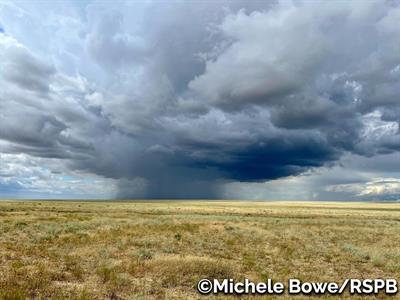
Image credit: Michele Bowe
This Special Issue accepts the following article types, unless otherwise specified in the Special Issue description:
Articles that are accepted for publication by our external editors following rigorous peer review incur a publishing fee charged to Authors, institutions, or funders.
Keywords: rangelands, resilience, pastoralism, social-ecological systems, governance, livelihoods, climate change, land management
BirdLife international
Cambridge, United Kingdom
Royal Botanic Gardens, Kew
Richmond, United Kingdom
Association for the Conservation of Biodiversity of Kazakhstan
Astana, Kazakhstan
Central-Asian Institute for Ecological Research
Almaty, Kazakhstan
University of Central Asia, Chuy Province
Bishkek, Kyrgyzstan
Mongolia Institute, ANU
Canberra, Australia
Frankfurt Zoological Society
Frankfurt am Main, Germany
Manuscripts can be submitted to this Special Issue via the main journal or any other participating journal.
Submit your idea
You will be redirected to our submission process.
