MZ
Mateusz Zamkowski
Medical University of Gdansk
Gdańsk, Poland
1,730
Total downloads
5,616
Total views and downloads
Submit your idea
You will be redirected to our submission process.
Manuscript Submission Deadline 12 April 2027
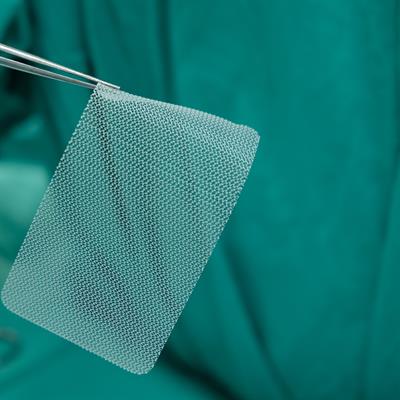
Hernia repair is one of the most common procedures in general surgery, and prosthetic meshes are central to its success. However, mesh behaviour in the abdominal wall is highly dynamic and influenced by material characteristics, anatomical location, fixation technique and patient-related factors such as coughing, physical activity and changes in intra-abdominal pressure. Traditional concepts of “stronger fixation equals better repair” are being challenged by data suggesting that over-fixation may increase pain without improving long-term stability, while under-fixation may predispose to displacement or failure. Parallel advances in material science, pressure chamber testing and finite element analysis now offer refined tools to quantify mesh–tissue interaction and predict performance, yet these insights are unevenly implemented in clinical practice and guidelines.
The aim of this Special Issue is to clarify how mesh fixation and biomechanical stability influence outcomes in abdominal wall and inguinal hernia repair, and to define what constitutes “adequate” fixation in different clinical scenarios. Although meshes and operative techniques have evolved rapidly, practice still varies widely with respect to fixation strategy, ranging from no fixation to multiple anchoring devices. At the same time, biomechanical testing and computational modelling generate complex data that are not always translated into practical recommendations for surgeons. This Special Issue seeks to bridge this gap by bringing together engineers, biomechanists and clinicians to critically examine the relationship between mesh properties, fixation methods, loading conditions and clinical endpoints such as recurrence, chronic pain and mesh-related complications. By synthesising experimental, numerical and clinical evidence, we aim to provide a more robust, physiology-oriented basis for decision-making in routine and complex hernia repair.
This Special Issue will cover experimental, computational and clinical aspects of mesh fixation and biomechanical stability in ventral and inguinal hernia repair. We invite contributions on topics including, but not limited to: in-vitro and in-silico models of mesh–tissue interaction; comparative evaluation of fixation methods (tackers, sutures, glues, hybrid and self-gripping concepts, fixation-free strategies); design and testing of novel meshes; dynamic pressure and load-to-failure studies; correlation of biomechanical parameters with recurrence, bulging, chronic pain and quality of life; and biomechanical considerations in complex hernia scenarios. We welcome original research articles, systematic or narrative reviews, technical notes, short communications, and multidisciplinary consensus or position papers that help translate biomechanical knowledge into practical recommendations for surgeons and allied specialists.
Fee Support
As a Gold open-access journal, all submissions are subject to publishing fees. If you require support for Article Processing Charges (APC) a limited number of waivers are available, to apply please complete our Fee Support Application form. JAWS’ authors can also benefit from financial support from their institution through Frontiers' Institutional Agreements. For full details please see the journals Publishing Fees page. Any questions? Please contact the Publishing Office.
This Special Issue accepts the following article types, unless otherwise specified in the Special Issue description:
Articles that are accepted for publication by our external editors following rigorous peer review incur a publishing fee charged to Authors, institutions, or funders.
Keywords: Mesh fixation, Abdominal wall hernia, Inguinal hernia repair, Biomechanical stability, Mesh–tissue interaction, Finite element analysis, Ventral hernia, Laparoscopic hernia repair, Mesh design and materials
Manuscripts can be submitted to this Special Issue via the main journal or any other participating journal.
Submit your idea
You will be redirected to our submission process.
